A delegation from the Kamra tal-Periti, led by President Perit André Pizzuto, on Thursday met with the Leader of the Opposition, Hon. Dr Alex Borg, and the Shadow Minister for Infrastructure and Employment, Hon. Perit Julian Borg, at the Partit Nazzjonalista Headquarters to discuss the Kamra’s work and proposals for strategic reforms within the construction and planning sectors.
During the meeting, the Kamra briefed the Opposition delegation on the progress of the new national building codes. The delegation also presented its vision for a re-engineered planning framework aimed at streamlining approval processes and elevating architectural standards through proposed Design Review Panels. Additionally, discussions addressed proposed legislative amendments to the Periti Act to strengthen disciplinary mechanisms, and resolve ongoing challenges regarding professional indemnity insurance cover.
The Kamra tal-Periti reaffirmed its commitment to maintaining open communication with all political stakeholders to ensure the implementation of effective, quality-driven reforms across the built environment.
https://kamratalperiti.org/wp-content/uploads/pn.jpg12001600Joeaby Vassallohttps://kamratalperiti.org/wp-content/uploads/logo-3-300x159.pngJoeaby Vassallo2026-09-10 19:25:372026-09-11 13:51:48PR 07/26 | Kamra tal-Periti Meets Partit Nazzjonalista Leadership to Discuss Building Regulations and Planning Reforms
Following several months of discussions and consultation between Kamra tal-Periti and the Land Registration Agency (LRA), we are pleased to inform members that the LRA will be launching the Official Searches Module and the Site Plan Module forming part of its new Land Registration System (LRS) on the 5th of August 2026.
The new system will enable Periti to order and download site plans digitally, plot boundaries online, and submit Form E requests electronically through the LRS portal. Old site plans issued under the previous system will continue to be accepted until the 6th of November 2026.
Members are encouraged to familiarise themselves with the attached communication and to begin making use of the new system from the launch date.
Kamra tal-Periti remains committed to supporting members throughout this transition. Should there be sufficient interest or need, the Kamra will coordinate training sessions and information meetings to assist members in becoming acquainted with the new procedures.
https://kamratalperiti.org/wp-content/uploads/Image-Sample-LRS.png872927Fabio Sciclunahttps://kamratalperiti.org/wp-content/uploads/logo-3-300x159.pngFabio Scicluna2026-08-03 09:59:232026-08-10 09:35:37CIR 05/26 | Launch of the Land Registration Agency's new information system (LRS)
This circular serves as an update to Circular 01/2026 issued on 26th March 2026 concerning the purported requirement for periti to hold a register for a skill card.
Members will recall that on 24th March 2026 the Building and Construction Authority (BCA) was contacting periti via email indicating that they are legally required to possess a skill card to enter a construction site as from January 2027.
Circular CIR 01/2026 clarified that no such regulatory requirement exists since the regulations regarding the construction industry skills cards are still being finalised and have thus not been brought into force.
The National Building Council (NBC), composed of Kamra tal-Periti and Malta Development Association, requested an urgent meeting with the BCA to seek clarifications on the skill card scheme to ensure that there is broad consensus on the legal text and adequate time for the industry to prepare itself, particularly in view of the envisaged timeframes. The absence of published regulations was not only creating uncertainty, but making it challenging for compliant course curricula to be developed and accredited in time. Indeed, while the regulator’s intent is for the course to reach EQF Level 2, many courses claiming to be providing the necessary training for the attainment of the skill card have only achieved an EQF Level 1 accreditation.
The NBC met with the BCA on 7th May 2026 during which the above concerns were raised. In particular, the NBC emphasised that periti, whose training reaches a minimum of EQF Level 7, should not be subjected to the same regime as unskilled labourers.
The Council welcomes initiatives aimed at improving health and safety awareness and competence within the construction industry. However, the Perit profession is already regulated under a statutory warrant system, which requires advanced academic qualifications, supervised professional training, and compliance with a dedicated legal and regulatory framework.
Moroever, the new Periti Act envisages the introduction of mandatory continuous professional development governed by the Kamra tal-Periti. During the AGM of 2024, former council member Perit Dr Rebecca Dalli Gonzi had given a thorough presentation of the CPD framework the Kamra is working on, which will include health and safety and risk management as core subjects.
During the May meeting, BCA CEO Perit Roderick Bonnici agreed that periti should not be required to participate in any training courses to attain a skill card given that they are in possession of relevant academic and professional qualifications that exceed EQF Level 2, and that the draft regulations will reflect this.
The Council of the Kamra tal-Periti eagerly awaits being given a draft of the regulations when they are written to be able to also guide members of the profession on the status of non-warranted technical staff who undertake site-work.
The Kamra tal-Periti wishes to bring to the attention of all periti that the original sanitary regulations forming part of the Code of Police Laws were repealed through Legal Notice 99 of 2026.
The repealed sections of the Code of Police Laws through the aforementioned legal notice concerned (see end of circular – print version for full repealed legal text):
minimum internal clear heights [Art 97.1(d)];
provision of natural light and ventilation requirement, including passive vents [Art 97.1(e)];
backyard and internal yard dimensions [Art 97.1(n)(i) – (n)(iv)];
requirement to file for permission from the Superintendent of Public Health prior to carrying out works [Art 97.1(o)(iv)];
use of artificial lighting and mechanical ventilation (Art 99);
use of basements for habitation (Art 107 & 108);
formation of ventilation shafts in pavements to ventilate cellars (Art 109);
sanitary licensing requirements for the occupation of apartment blocks (Art 110);
overcrowding parameters (Art 112);
restriction on letting overcrowded units (Art 113);
exemption from observance of sanitary regulations for agricultural or husbandry facilities.
Periti are to note that this legal notice will not bring about any practical changes other than to provide legal certainty to professionals and their clients on which laws and regulations are applicable in the design of buildings.
The Kamra tal-Periti was referred a draft PA circular 2/26 on 30th April 2026 for its review and feedback. This was immediately referred to all its internal structures, in particular the Council and the Policy Committee on Heritage. The Council convened on Monday to review the detailed feedback from PC Heritage and to finalise its position on the entire circular.
This afternoon, while the secretariat was finalising the document for submission to the PA, it was noted that the PA issued the circular before receiving the Kamra’s feedback. This is deeply regretted as there are several improvements that are required to the circular as published.
While it is unusual for the Council to publish its positions on informal consultation processes, the Council felt it is appropriate to bring to the attention of members of the profession its position on the contents of the latest PA circular.
The Council shall be issuing further communications, including possible directives, on how periti are to proceed in the coming days.
https://kamratalperiti.org/wp-content/uploads/featureImage.jpg12801920Fabio Sciclunahttps://kamratalperiti.org/wp-content/uploads/logo-3-300x159.pngFabio Scicluna2026-05-13 18:01:312026-07-16 18:16:32CIR 02/26 | PA Circular on Agricultural Land Holdings, Restoration Projects, Visual Simulations, and Minor Amendment Requests
The Council refers to an email sent out by the BCA to periti on 24th March 2026 with details on how to apply and pay for a skill card. The email goes on to say that anyone not in possession of such a card will not be allowed to enter a construction site, including during the finishing stages.
After further inquiries, it emerged that the BCA is informing members of the profession that the requirement for the possession of a skill card also applies to periti.
It is pertinent to underscore that such obligation does not presently exist. There are indeed no regulations in place stipulating this requirement.
While the Council is in favour of upskilling labourers to ensure that they receive basic awareness training on health and safety risks until they go through further formalised training in their respective trade, periti are governed by a warrant regime based on high-level academic and professional education, and an ad-hoc law and regulator setting significantly higher benchmarks of qualifications and practice standards.
Representatives of the Council met with the BCA yesterday afternoon to clarify the matter. The following points were raised:
The Council was not presented with any draft regulations and has thus never agreed to the imposition of such requirements on periti.
Likewise, the course content has not been reviewed by the Council of the Kamra and has thus not consented to it.
The Kamra tal-Periti, not the Building & Construction Authority, is the legal regulator of periti. The BCA would be stepping outside of its legal scope if it sought to regulate periti.
Banning a perit from entering a construction site means that nobody can enter such a site, irrespective of whether they possess a skill card, since the Code of Police Laws requires that a perit provide general supervision on site.
The Periti Act has provisions which are expected to be brought into force over the coming months that introduce mandatory continuous professional development. The CPD framework had been presented to periti during a workshop held in July 2024 and adopted in its final draft by the AGM in December 2024. Among the mandatory core subjects to be introduced is a specific course on risk management and H&S.
The BCA agreed to review the matter and will revert in due course. The BCA also clarified that the regulations pertaining to skill cards are still being drafted.
Meanwhile, periti are advised to await further communication from the Council on the matter.
With reference to the press release issued on 18th March 2025, the Council of the Kamra tal-Periti hereby gives notice that it has concluded its investigation into whether the partial wall collapse that occurred last year in the Bulebel Industrial estate was the result of professional negligence.
On conclusion of its investigation, the Council determined that the collapse was the result of incorrect sequencing of works by the contractor, including the failure to infill and seal the perimeter walls, which were designed to support a slab before being cast.
The Council also noted that the project was characterised by poor workmanship in other areas, most notably mismatched wall joints near one of the corners of the site, due to the failure to build level masonry courses.
From the evidence gathered, it is amply clear that the collapse did not occur as a result of negligent designs or instructions, or more generally due to any professional negligence on the perit’s part.
Indeed, the Council observed that the correct execution of works falls under the exclusive responsibility of the contractor and/or licensed mason, and that it is not the perit’s remit to perform quality control of works on construction sites, as this would constitute a conflict of responsibilities that would transfer the liabilities of the contractor onto the perit, and violate basic principles of impartiality and independence.
In view of the above, the Council unanimously resolved to close this investigation.
https://kamratalperiti.org/wp-content/uploads/Bulebel_.png8641536Kamra tal-Peritihttps://kamratalperiti.org/wp-content/uploads/logo-3-300x159.pngKamra tal-Periti2026-03-26 08:25:112026-06-11 16:33:21PR 03/26 | KTP Council completes investigation into the partial wall collapse in Bulebel Industrial Estate
The Council of the Kamra tal-Periti wishes to inform the public that two days ago it opened investigations into the widely-reported incidents that occurred in Sliema and Bulebel constructions sites. This is standard procedure for the Council, which has decided to disclose the opening of these investigations due to the public interest that has arisen around these particular cases.
The purpose of the investigations is to establish whether there were any professional short-comings by warrant holders involved in the projects.
It is pertinent to underscore that the opening of an investigation should not be construed to constitute findings of malpractice.
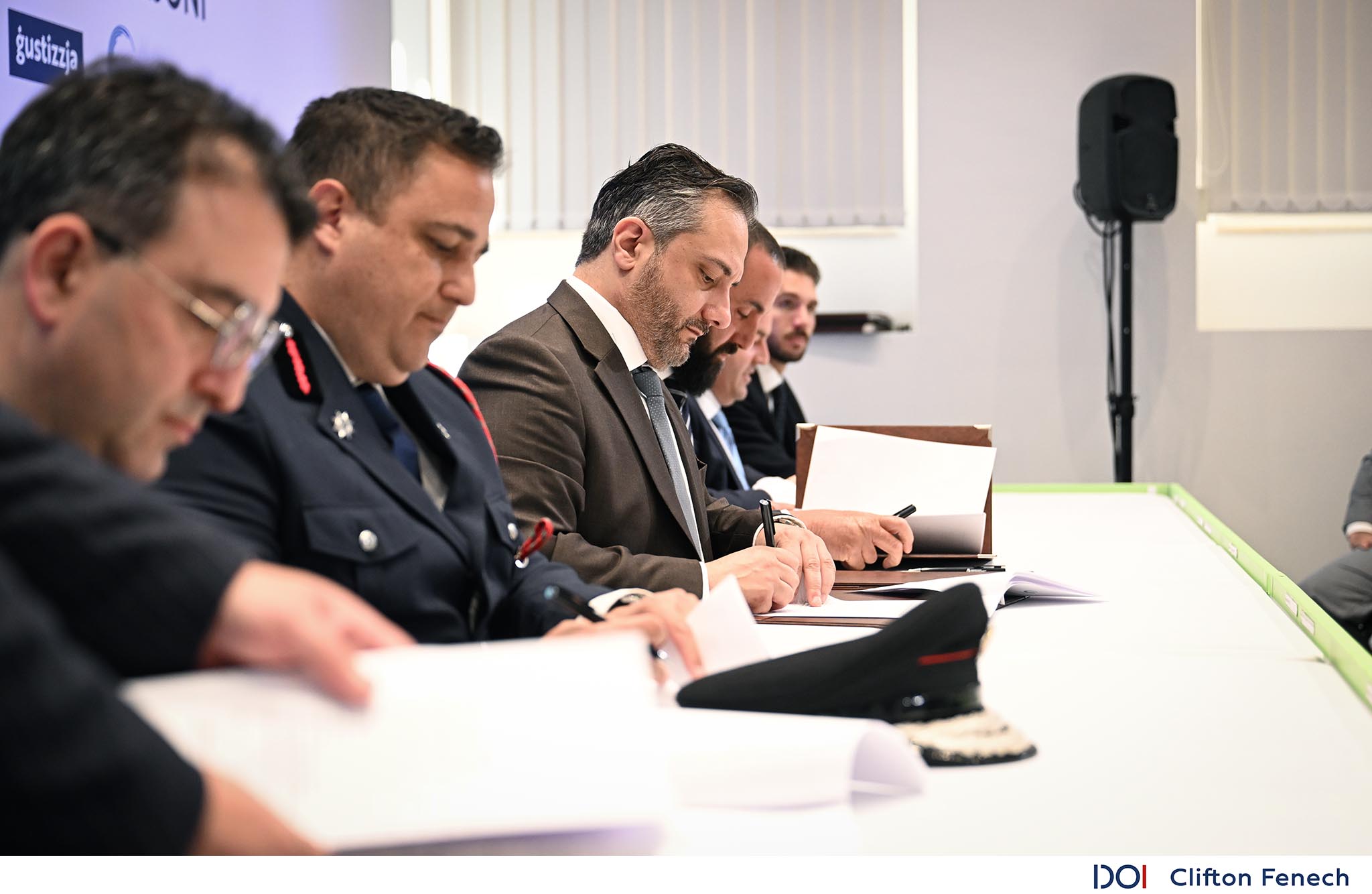
Earlier today Minister Jonathan Attard formally appointed the Kamra tal-Periti as its lead consultant in the drafting of the National Building and Construction Codes of Malta.
This is a historic milestone for the Kamra, after having campaigning incessantly for the implementation of its A Modern Building and Construction Regulation Framework for Maltafirst published in draft form in 2019, during the rapid succession of building collapses in various towns of Malta.
Through today’s agreement, the public sector and the industry stakeholders will be brought together to work towards a shared objective – that of implementing the recommendations regarding the building and construction codes outlined in the Sofia public inquiry report and adopting European standards and best practices over a period of three years.
The formation of the National Building Council, which brought together the two principal industry stakeholders, KTP and MDA, brought with it a spirit of ambition and determination to turn a page as quickly as possible on the negative perception the industry carries and shoulder responsibility for driving the necessary change forward.
The Kamra is honoured to have earned the trust of the Government and the industry stakeholders in taking the lead on such an important and delicate task. It is committed to living up to the expectations that are being placed on it.
https://kamratalperiti.org/wp-content/uploads/CLF_3949-copy.jpg14222048Kamra tal-Peritihttps://kamratalperiti.org/wp-content/uploads/logo-3-300x159.pngKamra tal-Periti2025-02-28 17:18:372025-02-28 19:51:09PR 02/25 | A historic achievement for the Kamra and the profession
Many Periti will have been approached by contractors asking them to sign a declaration confirming their competences in support of their application to receive a licence to operate as contractors.
Schedule I of S.L.623.09 (Construction Industry Licensing Regulations) stipulates that all workers engaged in demolition, excavation or construction should possess specific qualifications in the respective activity “or hold any other qualifications or experience which the Committee considers to be equivalent or a suitable alternative to this qualification”.
While courses in demolition and construction do exist – leading to the masons’ licence – there is no formal qualification for excavation operatives as yet.
Thus, the BCA and Contractors Licensing Committee have approached the Kamra to discuss whether, as an interim measure, we would agree to introducing a system wherein periti would provide a reference confirming the skills of contractors.
It was clear to the Council that without our agreement to such a proposal, the entire industry would seize as very few contractors, if any, would be eligible for a licence without the alternative system being proposed.
The Kamra thus agreed to the concept in principle and proceeded to draft the wording for the eventual declarations published by the BCA.
The wording was crafted to ensure the following:
The declaration made by periti are limited ONLY to the works execution they have direct experience on.
Periti employed by or otherwise directly connected to contractors would not be coerced into signing declarations they do not feel comfortable with or which compromise their independence and integrity, and to ensure that they are not placed in a position of conflict of interest.
The statutory requirement is that contractors demonstrate the skills listed in Schedule I (and the forms) in at least three projects over a period of two years.
The Kamra was assured that this is an interim measure and will be replaced with formal training of workers as soon as practicably possible. We are also working on this through the National Building Council, which is a joint-venture between KTP and MDA.
The Council recommends that periti exercise their professional judgement in signing these forms, crossing out any parts they feel are not applicable to their direct experience be upheld. It goes without saying that you should refrain from signing such declarations if your personal experience of the contractor’s work is inadequate.
You are entitled to charge fees for the signing of such declarations.
In case of difficulty, please do not hesitate to contact the Council through our usual channels.
https://kamratalperiti.org/wp-content/uploads/construction.jpg640960Kamra tal-Peritihttps://kamratalperiti.org/wp-content/uploads/logo-3-300x159.pngKamra tal-Periti2024-09-27 14:21:112024-09-27 15:53:07CIR 07/24 | Periti declarations in support of contractors' licence applications