,

SHARE Malta 2026 International Architecture Forum: Sustainability, Heritage and Coastal Urbanism

Following the success of its inaugural 2025 edition, the SHARE forum returns to Malta, evolving from a pilot initiative into a definitive platform for the Mediterranean region. While last year’s agenda established the foundations of quality of life and showcased large-scale developments led by Foster + Partners and Zaha Hadid Architects, the 2026 edition marks a significant evolution, pushing the architectural discourse even further

We have reached a critical tipping point where climate change is no longer a distant threat but a tangible reality. In the Mediterranean, record-breaking temperatures are shifting architecture from a realm of aesthetic preference to a mandate for climate adaptation. The most compelling narrative today is the collision between the grand visions of international ‘starchitects’ and the granular reality of the local landscape. While global experts propose revolutionary concepts, local practitioners must navigate the friction of spatial scarcity, stringent regulatory frameworks, and the profound responsibility of historical preservation.

In this context, the SHARE forum seeks to provide the industry’s answer to the crucial question: how can we build today in a way that we won’t regret tomorrow?

Moving beyond conceptual presentations, this year’s edition focuses on a rigorous analysis of industry practices. We are navigating the friction between the pursuit of luxury and the preservation of memory, as well as the gap between mere development and true sustainability. Our objective is to catalyse a genuine shift in how we shape the modern urban fabric.


Is this a date?


On Friday, May 22, 2026, the SHARE forum returns to Malta, hosted by the DoubleTree by Hilton in St. Paul’s Bay, a landmark formerly known as the Dolmen Hotel.

At its core, beyond the technical specifications, SHARE Malta 2026 is fundamentally a summit on the transformative power of space. The forum explores how intelligent design can recalibrate a region’s entire identity, turning overlooked structures into thriving economic and cultural landmarks

The day offers a comprehensive agenda of technical sessions and expert panels, followed by an immersive cultural excursion to a nearby archaeological landmark at 6:00 PM. The forum concludes with the SHARE Malta After Event Party at 7:30 PM, providing guests with a relaxed, open-air atmosphere to foster professional connections and celebrate the day’s insights.


Who will be there?

The event brings together

  • Visionary Architects who design with centuries-long legacies in mind;
  • Institutional Leaders representing professional associations from Malta, Kosovo, and Egypt;
  • Strategic Developers and Officials—the decision-makers shaping budgets and landscapes;
  • You


Three core pillars

The event is structured around three core pillars, each reflecting the urgent challenges and transformative potential of today’s global urban landscape:

  1. Identity-Based Rehabilitation (Building on Memory): The central issue here is how to graft ultra-modern architecture onto historic structures without destroying the spirit of the place. This is a critical issue for Malta (an island-museum) and for the rest of Europe;


  1. Large-Scale Urban Planning (Master Planning): this segment focuses on the concept of ‘cities within cities’ and serves as the forum’s premier showcase. We will explore multi-billion-dollar benchmarks from Asia and the Middle East, ranging from Zaha Hadid Architects’ iconic hospitality landmarks in Dubai to the visionary cultural districts in Shenzhen designed by 2Portzamparc;


  1. Beyond Greenwashing: this is the ethical approach. Architects acknowledge that simply adding plants to a facade does not equate to sustainability. The focus will be on innovative materials (laminated wood, disruptive technologies) that genuinely reduce the carbon footprint.


Key discussion themes and speakers

How can architecture be used as a city branding tool?

Architectural landmarks designed by firms such as Zaha Hadid Architects or BIG (Bjarke Ingels Group) significantly bolster the market value of their surroundings. In this light, the forum will examine urban regeneration initiatives that pivot industrial or neglected districts into premier global destinations. The discussion will also explore how iconic architecture has become a decisive factor in the strategic competition between cities to attract talent, tourism, and investment


  • Anat Stern (Zaha Hadid Architects) will explore how projects such as Alba Residences in Dubai and Studio City in Macau are attracting foreign investment and luxury tourism. ZHA’s fluid, unmistakable style serves as a mark of prestige.


  • Rex Bombardelli (2Portzamparc) will offer a uniquely French perspective on large-scale cultural infrastructure, drawing on landmark projects such as the Suzhou Cultural Centre in China. His presentation will dissect how monumental cultural investments can serve as economic engines, revitalising entire regions through the ‘Bilbao Effect’


  • Hanna Johansson (BIG) will speak about “hedonistic sustainability”, meaning the idea that a sustainable building can also be highly profitable and visually appealing, thereby changing perceptions of business districts.


How to navigate the friction between innovation and local identity?


Under the banner of ‘Building on Memory,’ the forum addresses the sensitive intersection of heritage and gentrification. The challenge lies in introducing luxury and modern infrastructure into historic settings without compromising their cultural authenticity. The experts will argue that innovation, far from being a threat, is the essential mechanism for adaptive reuse, saving heritage from decay. This is especially pertinent in the Maltese context, where a scarcity of space meets an abundance of history at every turn


  • Paolo di Nardo (ARX), who is an expert on the Italian context (which is very similar to the Maltese one), will present case studies such as Stella Maris, demonstrating how modern technology can be integrated into historic structures to extend their lifespan without altering their identity.


  • Javier Villar (JVAD), who has over two decades of experience working alongside Kengo Kuma in Japan, will discuss minimalism and respect for local materials. He will explain how the Japanese aesthetic of fragility and transparency can be applied to allow historic monuments to breathe alongside new structures.


  • Emre Arolat (EAA) has redefined how we build in historically sensitive contexts. Using his landmark Museum Hotel Antakya as a blueprint, he will illustrate his philosophy of architectural coexistence. Arolat’s session will prove that historical layers are not obstacles to progress; rather, they are assets that, when handled with vision, can turn a complex site into a world-class landmark that honours its heritage


The Green Pivot

Acknowledging that architecture remains one of the world’s most carbon-intensive industries, this year’s forum adopts a rigorous stance: ‘Beyond Greenwashing.’ The focus shifts from superficial labels to substantive change, exploring alternative materials and the concept of adaptive longevity. The goal is to design buildings that can be repurposed in 50 years rather than demolished. Furthermore, the discussion will focus on bioclimatic design. How can the architecture harness the Mediterranean sun and wind as assets, rather than relying on energy-heavy systems for climate control


  • Jeremy Smith (Irving Smith Architects), a global pioneer in sustainable materials, will showcase the SCION Timber Innovation Hub. He will present Mass Timber (CLT—Cross-Laminated Timber) as the viable, carbon-sequestering alternative to concrete and steel for high-rise construction. Smith’s presentation will illustrate a fundamental shift in the industry, moving toward buildings that act as ‘carbon sinks,’ storing CO2 within their very structure rather than emitting it during production.


  • Ken Mackay (Mackay + Partners) will introduce the concept of ‘architectural camouflage’ through the lens of the Comporta Eco Resort project. The focus remains on buildings designed to be nearly invisible, blending into the Portuguese coastal landscape with surgical precision. This session will highlight a shift toward low-impact development, where the goal is no longer to dominate the site, but to inhabit it with profound environmental sensitivity.


  • Iman Gawad (African Union of Architects) will offer a critical perspective on sustainability in arid climates, explaining why green solutions from Europe do not always work in Africa or the Mediterranean, and how vernacular design is, in fact, the most environmentally friendly.


Participation Details

Registrations are open for professionals and technology partners.

Full details and the agenda are available on the event website: share-architects.com.

About SHARE Architects

SHARE Architects is an international platform dedicated to promoting excellence in architecture and facilitating professional dialogue on a global level. By organizing conferences, forums, and networking events across Europe, Central Asia, and the Middle East, SHARE Architects brings together renowned architects, industry leaders, and professionals from related fields, contributing to the exchange of ideas, innovation, and best practices. Over time, the platform has become an important landmark for the architectural community, supporting sustainable development and the quality of the built environment.


,

Architecture at the Heart of Europe’s Cultural Future: Insights from Copenhagen

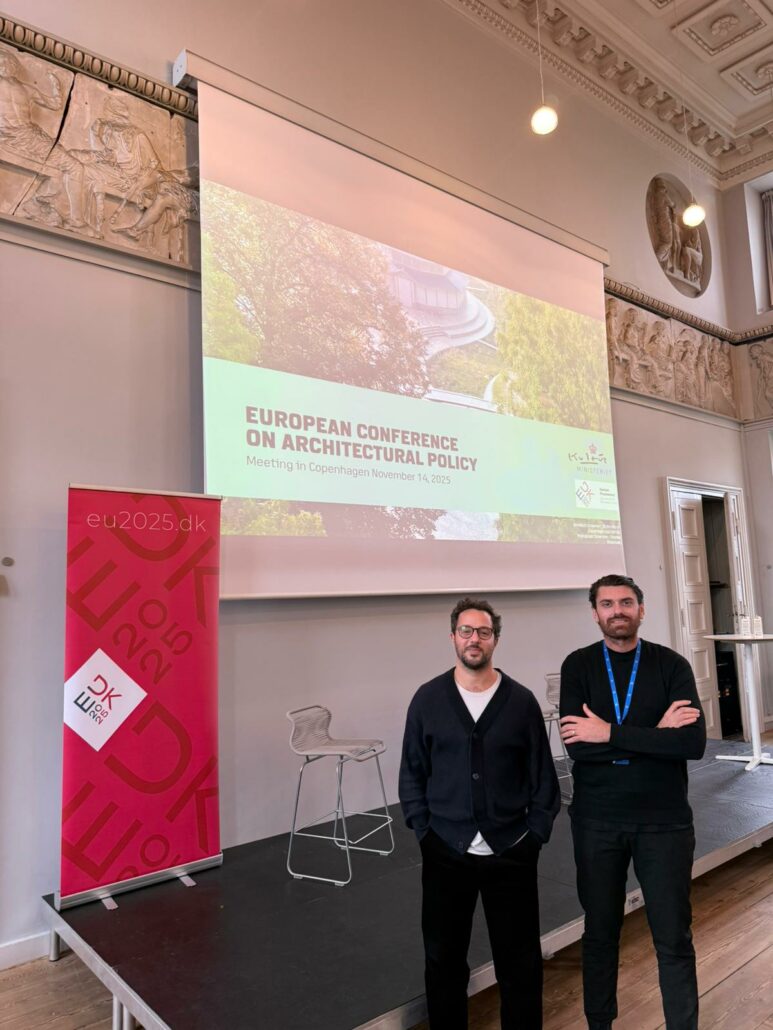
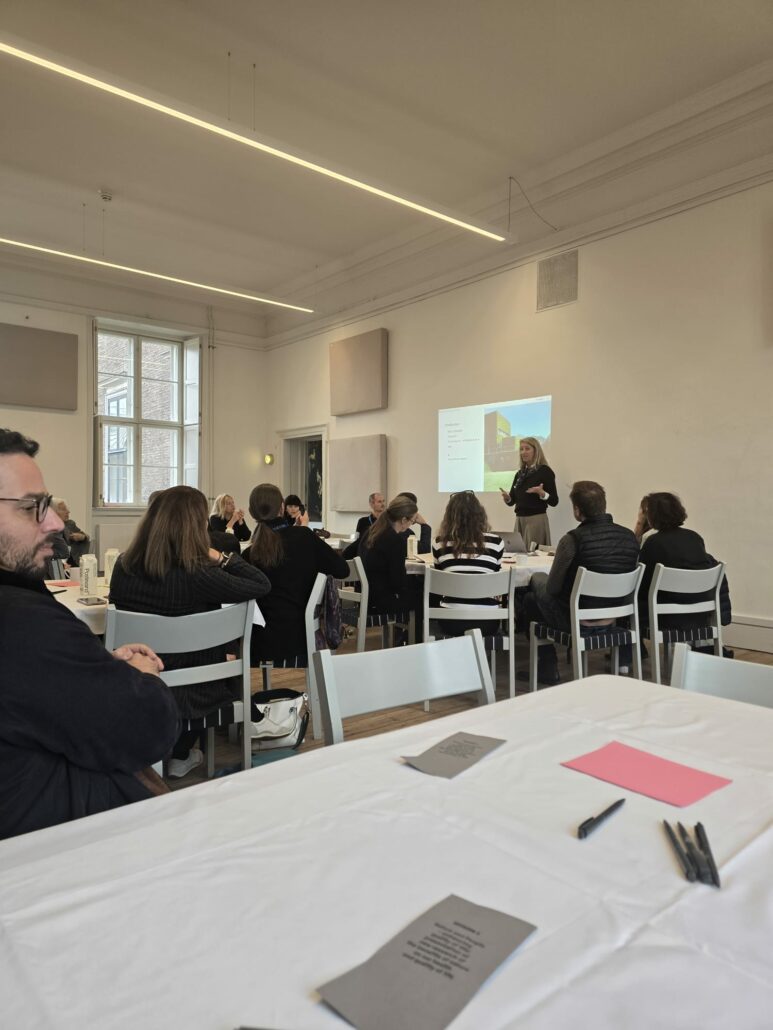
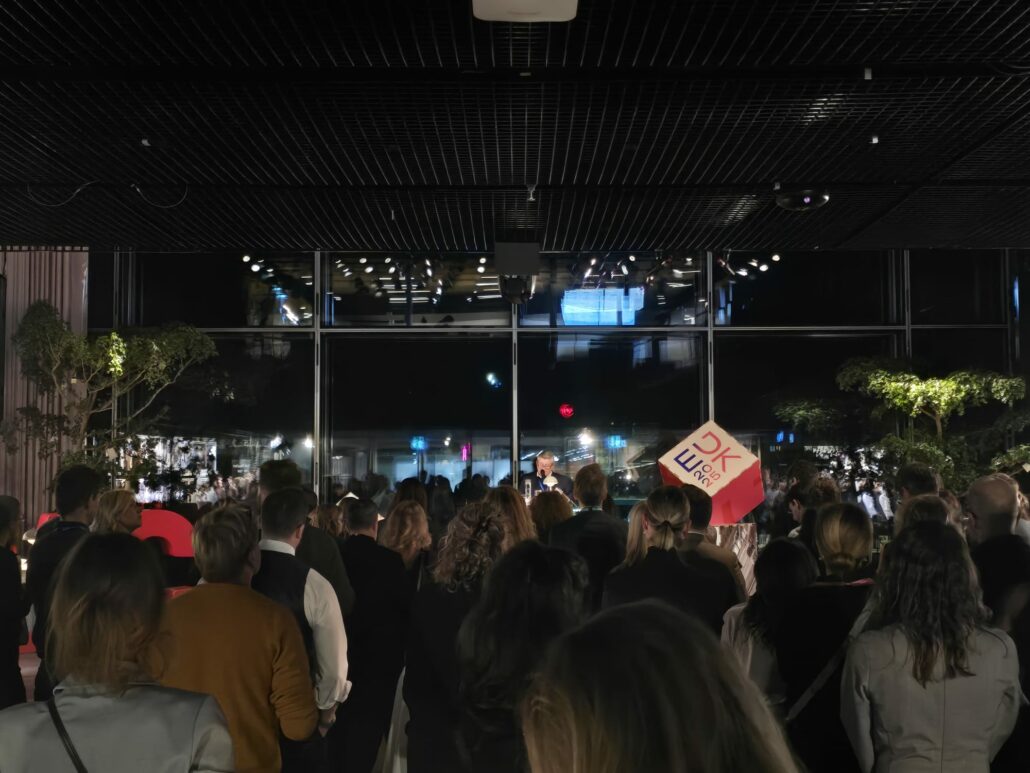
The launch of Denmark’s new architectural policy in Copenhagen provided a platform for European leaders, practitioners, and cultural stakeholders to reaffirm architecture’s expanding role in shaping societal wellbeing, sustainability, and competitiveness. Speakers highlighted that architecture today is inseparable from broader cultural and educational ecosystems. Denmark’s presidency was commended for embedding architecture firmly within cultural policy, positioning it as a driver of innovation, healthy environments, and economic vitality. The discussions underscored that investment in culture and creative industries—supported by programmes such as the International Plus initiative—strengthens the connection between education, real-world design, reconstruction, and the cultivation of resilient communities.

A recurring theme was cultural diversity as a foundational European value. The new Culture Communication document was presented as a milestone in recognising how diverse cultural expressions enrich citizens’ lives, with architecture explicitly referenced as a tool for creating high-quality living environments. Participants emphasised the continuing influence of the Bauhaus movement on modern design and Europe’s reconstruction agenda, setting the stage for the emerging European Powerhouse initiative—a framework aimed at strategically coordinating cultural and architectural ambitions across the continent.

Speakers also addressed pressing challenges confronting Europe’s built environment. Museums face operational and financial strain, while the continent urgently requires a coherent affordable housing strategy. Architecture, they argued, must remain central to public policy to ensure that design excellence and social responsibility drive decision-making. New policies for defence and industrial capacity were discussed, with calls to ensure that cultural and creative sectors are not sidelined. Several pilot projects will be launched to demonstrate the transformative potential of culture in rural and peripheral regions.

Architects and practitioners shared examples of innovative projects illustrating the breadth of contemporary architectural thinking. Presenters stressed the importance of approaching architecture through integrated lenses—landscape, mobility, and strategic urban planning—especially in the context of climate change, social fragmentation, and declining public spaces. High-quality social infrastructure, climate-aligned urbanism, and collaborative design processes were highlighted as effective pathways for creating resilient cities.

International case studies from Denmark, the United States, and Shanghai reinforced the value of working sensitively with existing infrastructure. Projects transforming riverfronts, public transit corridors, and former industrial areas demonstrated how strategic planning principles can enhance connectivity and radically improve daily life for millions.

The European Bauhaus initiative emerged as a unifying thread across the event. Speakers described its mission to integrate sustainability, inclusion, and aesthetics in reshaping urban environments. With broad collaboration involving companies, NGOs, and communities, the initiative is developing shared principles and a manifesto to guide architectural transformation across Europe. The experience of Ljubljana, which applied Bauhaus principles to redevelop a large warehouse district, illustrated the challenges and rewards of participatory and community-driven urbanism.

The Copenhagen discussions converged on a clear message: nature connectedness must be embedded at the heart of Europe’s architectural and urban development agenda. Local initiatives, supported by national strategies and EU-level coordination, are essential to overcome barriers such as limited space, funding, and public resistance. Blue-green infrastructure, community-driven design, and cross-sector collaboration—spanning developers, governments, educators, and civil society—will be vital for building cities that are socially resilient, environmentally regenerative, and culturally meaningful. Continued research, experimentation, and shared learning across Europe will be crucial to advancing this integrated vision for sustainable urban transformation.

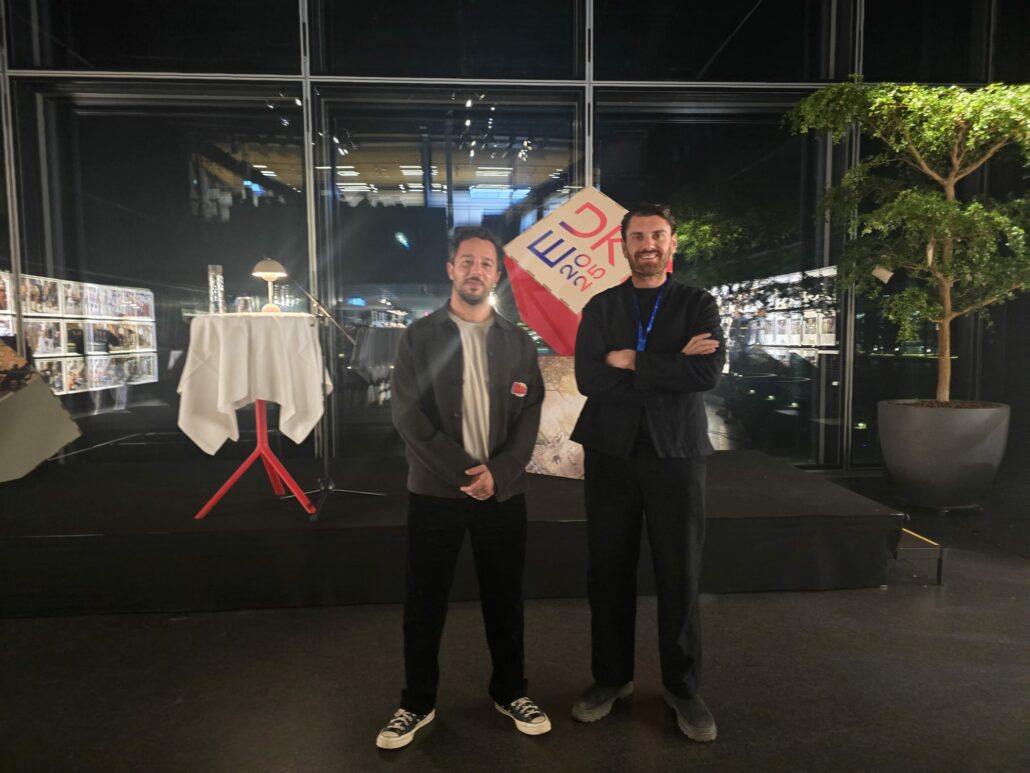
Perit Maurizio Ascione and Perit Karl Francalanza (Policy Committee on Architecture Chairperson and Member) represented Kamra tal-Periti at this key event, reinforcing our commitment to policy-driven architecture.


, ,

PR 16/25 | Union of Mediterranean Architects’ General Assembly held in Malta approves KTP motion calling for culturally sensitive and humane reconstruction of Gaza

Over the past two days, the Kamra tal-Periti hosted delegates from Mediterranean architectural associations for a conference on Cultural Resilience and the Union of Mediterranean Architects’ General Assembly. 

On Friday, the UMAR General Assembly adopted the declaration moved by the KTP calling for a culturally, socially, and humanely sensitive reconstruction of Gaza, denouncing any attempts to undertake speculative development unrelated to the endemic population’s needs. 

The motion, presented by KTP President Perit André Pizzuto, calls on the international community to set up an independent international assessment, with the participation of UNHABITAT, UNESCO, and UIA, of the destruction inflicted on Gaza’s built environment, heritage, and civilian infrastructure. 

The motion also calls on “all architects, planners, and built-environment professionals worldwide to uphold their ethical obligation to refrain from participating in projects that contribute to forced displacement, settlement expansion, speculative development unrelated to the endemic population’s needs, or violations of international humanitarian law.” 

On Thursday, KTP organised a conference which investigated the impact of climate change, tourism, and armed conflicts on cultural heritage within the Mediterranean region. European Commissioner for Culture Glenn Micallef and other distinguished international and local speakers delivered inspiring presentations which are expected to form the basis for future international collaboration on regional cultural projects over the months ahead. 


In the pictures, scenes from Gaza and its port, courtesy of Mr Mahmoud Alamour; Palestinian Architect and UMAR Council Member.


, , ,

PR 04/24 | Kamra tal-Periti’s Palestinian Student Initiative Receives Government Support

Last Thursday, Perit Andre Pizzuto, President of Kamra tal-Periti, and Perit Joeaby Vassallo, Communications & International Secretary, met with Minister Ian Borg, the Minister for Foreign and European Affairs and Trade, to discuss the Chamber’s collaboration with Birzeit University, Palestine. This initiative is aimed at organising a practical architectural experience for Palestinian architecture students in Malta.

During the discussions, Minister Borg praised the initiative, stating, “The real test of our country’s commitment to peace, mutual respect, and generosity towards people living in conflict zones is the success of such intercultural collaborations.” The Ministry for Foreign Affairs is providing consular assistance to facilitate the smooth arrival and stay of the students in Malta and other logistical support.

Perit Andre Pizzuto reinforced the Minister’s sentiments: “Architecture is about building communities through cultural gestures in public spaces that aim to improve the quality of life of those who inhabit them. By establishing robust collaboration among Mediterranean architects, we not only strengthen our professional ties but also amplify our collective impact on regional development. This summer, we are dedicated to enriching the educational experiences of our Palestinian colleagues through international exposure.”

Project Development and Updates

Kamra tal-Periti is setting up a pop-up studio for 15 Palestinian architecture students who will spend a the second half of this July in Malta engaging in a hands-on, transformative educational program. The studio aims to blend Palestinian and Maltese design approaches, fostering collaboration and idea-sharing among participants while establishing significant connections in the international architectural community.

Since its launch in April, the initiative has received strong support, with numerous Periti, architecture students and other individuals offering their assistance. Discussions with the Embassy of Palestine in Malta are progressing well to enhance this collaboration. We are calling on the public to support this project through various means, including accommodation, travel sponsorships, resources for the pop-up studio, and mentorship opportunities with local professionals.

Expression of Interest for Accommodation

As July approaches, there is a pressing need to secure suitable accommodation for the 15 Palestinian architecture students and 3 tutors participating in our program. In response to this critical requirement, Kamra tal-Periti is officially launching an Expression of Interest for Accomodation. While the students are prepared to cover their accommodation costs, any form of sponsorship, whether partial or complete, would be greatly appreciated and would substantially facilitate the success of this experience.

We earnestly appeal to the public and potential sponsors to assist in meeting this crucial need. For details on how to submit your proposal or to discuss potential collaboration, please refer to the Expression of Interest here.

For more information or to offer support, contact Kamra tal-Periti by email at [email protected] or via phone or WhatsApp at +356 99 202 406.

,

Judgement of ECJ: minimum and maximum rates of fees for architects and engineers (HOAI) are not compatible with EU law

This is a Press Statement issued by the Bundesarchitektenkammer – BAK (Federal Chamber of German Architects)


In its judgement of 4/7/2019, the European Court of Justice (ECJ) determined that the minimum and maximum rates of fees for architects and engineers (HOAI) are not compatible with EU law. This was despite the court confirming that minimum rates can help to ensure the high quality of planning services. However, the German regulation does not pursue this objective in a coherent and systematic manner, since planning services can also be provided by service providers without the latter having to provide proof of their professional aptitude. The ECJ does not consider the binding nature of the maximum rates to be necessary, since the German Federal Government has not sufficiently substantiated that a non-binding framework for pricing is not sufficient to guarantee consumer protection.

In the run-up to the ruling, the Federal Chamber of German Architects (BAK), the Federal Chamber of Engineers (BingK) and the organisation regrouping architects´ and engineers` associations for the HOAI  (AHO) had initially been able to persuade the German Federal Government to uphold the HOAI and to defend the binding minimum and maximum rates before the ECJ, and through that alone they were maintained for almost half a decade longer. Throughout the entire procedure, the BAK together with BIngK and AHO supported the German Federal Government with comprehensive legal and empirical-economic expert reports. The ACE, private builder associations and the BFB (German liberal professions) were also involved in providing political and presentation support. Unfortunately, all of these efforts have not been successful.

The obligation to comply with binding minimum and maximum rates must indeed be abolished as soon as possible due to the judgement. However, the HOAI can remain otherwise unchanged, since neither the performance plans nor the fee rates were the subject of the proceedings.

The judgement will undoubtedly have serious consequences. The BAK is therefore intensively examining which conclusions can be drawn from the ruling, in particular whether the “incoherence” objected to by the ECJ could be counteracted by restricting planning authorisation to architects and engineers. It is working with the BIngK and the AHO to minimise the impact of the ruling. These include proposals for the modification of the HOAI, to ensure that architects and engineers can continue to benefit from the usual, tried and tested fee structure. It is proposed that in the absence of any other express agreement, it is assumed that the average rates are considered to have been agreed. Unless otherwise agreed, the amount of remuneration must be commensurate with the nature and extent of the assignment and the performance of the architect. In the case of a dispute, the court of appeal (e.g. civil court or public procurement tribunal) should also be obliged to obtain an expert opinion from a chamber of architects or engineers.

Immediately after the ECJ ruling, the profession was provided with comprehensive information and support materials to minimise the uncertainty caused by the ruling, in particular with regard to its impact on existing and future contracts.


For further information on the ruling please visit the explanatory page.


,

ACE issues declaration in support of Germany on tariffs

In June 2015, the European Commission launched an infringement procedure against Germany on the grounds that the German minimum compulsory tariffs for architects and engineers (Honorarordnung für Architekten und Ingenieure – HOAI) would allegedly violate the Services Directive by preventing professionals from other Member States from establishing and providing their services freely in Germany.

On 28 February 2019, the Advocate General of the European Court of Justice (ECJ), Maciej Szpunar, released his opinion which considered the minimum and maximum tariffs as unlawful. The tariffs were said to hinder cross border activities, because engineering and architecture firms could not enter the market and establish their own prices. Furthermore, he claimed that Germany had not proved that the independent statutory fee-scales for architects and engineers were suitable and necessary for quality assurance and consumer protection. Therefore, he proposed that the Court uphold the Commission’s decision.

The leading German associations of architects and engineers, together with the Federal Government, strongly advocated maintaining the minimum and maximum tariffs and commissioned several advisory opinions. All studies commissioned in this context proved that there is no evidence to suggest that cross border activities are negatively affected by the presence of fee-scales. On the contrary, quality cannot be guaranteed where there is price dumping of architectural and engineering services. Moreover, the most economically advantageous tender, rather than cheapest price, has been recognised as a principle of the latest version of the Public Procurement Directive. Therefore, ACE finds it incomprehensible that the Advocate General did not follow the conclusive arguments given by the German government. ACE is strongly convinced that the minimum and maximum tariffs serve the common interest by:

  • Protecting customer’s rights through transparency of fees and related services for everyone, certainty of design costs, competition based on quality rather than price, higher quality and more positive results along with lower risks of dispute, amongst other benefits.
  • Supporting cross-border activities by providing helpful descriptions of services and guidelines for providing these services. Insufficient language skills and knowledge of building regulations or relocation issues are the main reasons for not moving to another country.
  • Continuing to ensure that courts have a basis on which to make awards during litigation, while public bodies have reference points that can be used when drawing up budgets for public works.

ACE still maintains that the HOAI does not constitute an obstacle to cross-border establishment and provision of architectural and engineering services in Europe, nor has the abolition of compulsory fee-scales in other Member States led to an increase in cross-border establishment in the past.

The Kamra tal-Periti is a member of the Architects’ Council of Europe.


,

Commission takes further action to ensure professionals can fully benefit from the Single Market

Yesterday, the Commission has taken further steps in infringement procedures against 26 Member States to ensure the full implementation of EU rules on the recognition of professional qualifications.

Only a well-functioning Single Market can deliver its full potential for citizens and businesses around Europe. In line with the Single Market Communication of 22 November 2018, the Commission is today taking further enforcement action to ensure that all Member States fully respect EU rules on the recognition of professional qualifications.

Professionals in the EU Single Market can move across borders and practice their occupation or provide services in another Member States. The EU has put rules in place to make it easier for professionals, such as doctors or architects, to have their professional qualifications recognised in another Member State. The Professional Qualifications Directive (Directive 2013/55/EU) was modernised in 2013 and had to be transposed into national law by 18 January 2016.

The Commission is today sending reasoned opinions to 24 Member States (Austria, Belgium, Bulgaria, Croatia, Cyprus, Denmark, Finland, France, Germany, Greece, Hungary, Ireland, Italy, Luxembourg, Malta, the Netherlands, Poland, Portugal, Romania, Slovakia, Slovenia, Spain, Sweden and the United Kingdom) and complementary letters of formal notice to 2 Member States (Estonia and Latvia) regarding the non-compliance of their national legislation and legal practice with EU rules on the recognition of professional qualifications (Directive 2005/36/EC as amended by Directive 2013/55/EU).

The reasoned opinions and supplementary letters of formal notice cover issues crucial for the functioning of the Professional Qualifications Directive, in particular:

  • European professional card: Austria, Belgium, Bulgaria, Croatia, Cyprus, Denmark, Finland, France, Hungary, Italy, Portugal, Romania, Slovakia, Slovenia and Sweden;
  • alert mechanism: Austria, Belgium, Croatia, Denmark, Estonia, France, Germany, Latvia, Malta, Portugal, Romania, Slovakia, Slovenia, Spain and Sweden;
  • possibility to have partial access to a professional activity: Austria, Belgium, Croatia, Denmark, Estonia, France, Germany, Hungary, Latvia, Malta, Poland, Slovakia, Slovenia and Sweden;
  • proportionality of language requirements: Belgium, Bulgaria, Croatia, Germany, Poland, Romania and Slovakia;
  • setting up of assistance centres: France, Hungary, Italy and Portugal;
  • transparency and proportionality of regulatory obstacles: Austria, Belgium, Bulgaria, Croatia, Cyprus, Denmark, Finland, France, Germany, Greece, Hungary, Ireland, Italy, Latvia, Luxembourg, Malta, the Netherlands, Poland, Portugal, Romania, Slovakia, Slovenia, Spain, Sweden and the United Kingdom.

These issues were also mentioned in a Communication from January 2017 on reform recommendations for regulation in professional services.

All Member States concerned have now two months to respond to the arguments put forward by the Commission. Without a satisfactory response, the Commission may decide to address a reasoned opinion to Estonia and Latvia, and to refer the other 24 Member States to the Court of Justice of the EU.

Background

With the EU rules on the recognition of professional qualifications (Directive 2005/36/EC as amended by Directive 2013/55/EU) the EU has put in place a modern system for the recognition of professional qualifications and experience across the EU. It promotes automatic recognition of professional qualifications in EU countries, making it easier for professionals to provide their services around Europe, whilst guaranteeing an improved level of protection for consumers and citizens.

The Directive applies in general to regulated professions such as nurses, doctors, pharmacists or architects. Exceptions are professions governed by specific EU directives such as auditors, insurance intermediaries, air traffic controllers, lawyers and commercial agents. The Directive also sets rules for
temporary mobility, establishment in another EU country, various systems of recognition of qualifications, and checks for knowledge of languages and professional academic titles.

These rules are complemented by the European professional card (EPC), an electronic certificate available since January 2016 for five professions (general care nurses, physiotherapists, pharmacists, real estate agents and mountain guides). To ensure that EU patients and consumers are adequately
protected, the Commission has also introduced an Alert Mechanism. The Member State that receives professionals from other EU countries is responsible for checking their qualifications or fitness to practice and, in cases of justified doubt, contacting the Member State that issued the diploma.

To facilitate and speed up this exchange of information between Member States, the Commission has put into place the electronic Internal Market Information System (IMI).

For More Information


This is a press release published by the European Commission on 07/03/2019

,

Call for Projects in Conflict Zone or Post-Conflict Situations

The International alliance for the protection of heritage in conflict areas (ALIPH) has a mandate to offer concrete support for the protection and reconstruction of cultural heritage in conflict zones or post-conflict situations.

ALIPH aims to financially support associations, foundations, cultural and heritage institutions, and international organisations working to preserve cultural heritage in the face of imminent conflict, or to intervene to rehabilitate it. ALIPH has set the objective of becoming a central actor in the protection of cultural heritage around the world within a three-year timeframe.

The organisation is already committed to the ambitious project of supporting the rehabilitation of the Mosul Museum in Iraq; restoring the Tomb of Askia in Gao, Mali; and rehabilitating the Mar Behnam Monastery in Northern Iraq.

ALIPH is now launching a worldwide call via its new website that will enable it to support prevention, protection and restoration projects on every scale, from the smallest local initiatives to ambitious long-term projects. ALIPH also aims to supply immediate aid wherever this is most urgently needed. Project proposals can be submitted up until 15 March 2019 on the ALIPH website : https://www.aliph-foundation.org/

“Too many places in the world know the suffering and destruction of armed conflict. Among the terrible casualties are the built embodiments of cultural heritage — the physical environments that define culture, creating and sustaining memories of place. Architects can help to protect cultural heritage in conflict zones, and to rebuild it when fighting subsides.  The UIA associates itself fully with the aims of the International Alliance for the Protection of Heritage in Conflict Areas (ALIPH), and joins with the French National Council of the Order of Architects (CNOA) to promulgate this important worldwide call for projects.”

Thomas Vonier, UIA President


Call for Entries: European Heritage Awards / Europa Nostra Awards 2019

The European Heritage Awards / Europa Nostra Awards are Europe’s highest honour in the heritage field. The Awards recognise the best conservation projects, the most impressive research; the most dedicated heritage professionals and volunteers; and the finest awareness raising, training and educational programmes.

Architects, craftsmen, cultural heritage experts, professionals and volunteers, public and private institutions, and local communities: this is your chance to win the top heritage award in Europe!

Up to 30 remarkable heritage achievements from all over Europe will be awarded. Of those, 7 laureates will receive a Grand Prix and €10,000 each; one will be granted the Public Choice Award, chosen through an online poll conducted by Europa Nostra, the leading European heritage network.

All the winners will be celebrated at the European Heritage Awards Ceremony in June 2019.

The EU Prize for Cultural Heritage / Europa Nostra Awards (as of 2019 the European Heritage Awards / Europa Nostra Awards) was launched by the European Commission in 2002 and has been run by Europa Nostra ever since. The Awards have brought major benefits to the winners, such as greater (inter)national exposure, increased visitor numbers and follow-on funding. The Awards scheme is supported by the Creative Europe programme of the European Union.

Submit your project and share your success across Europe!

Deadline: 15 November 2018 (date of receipt)